
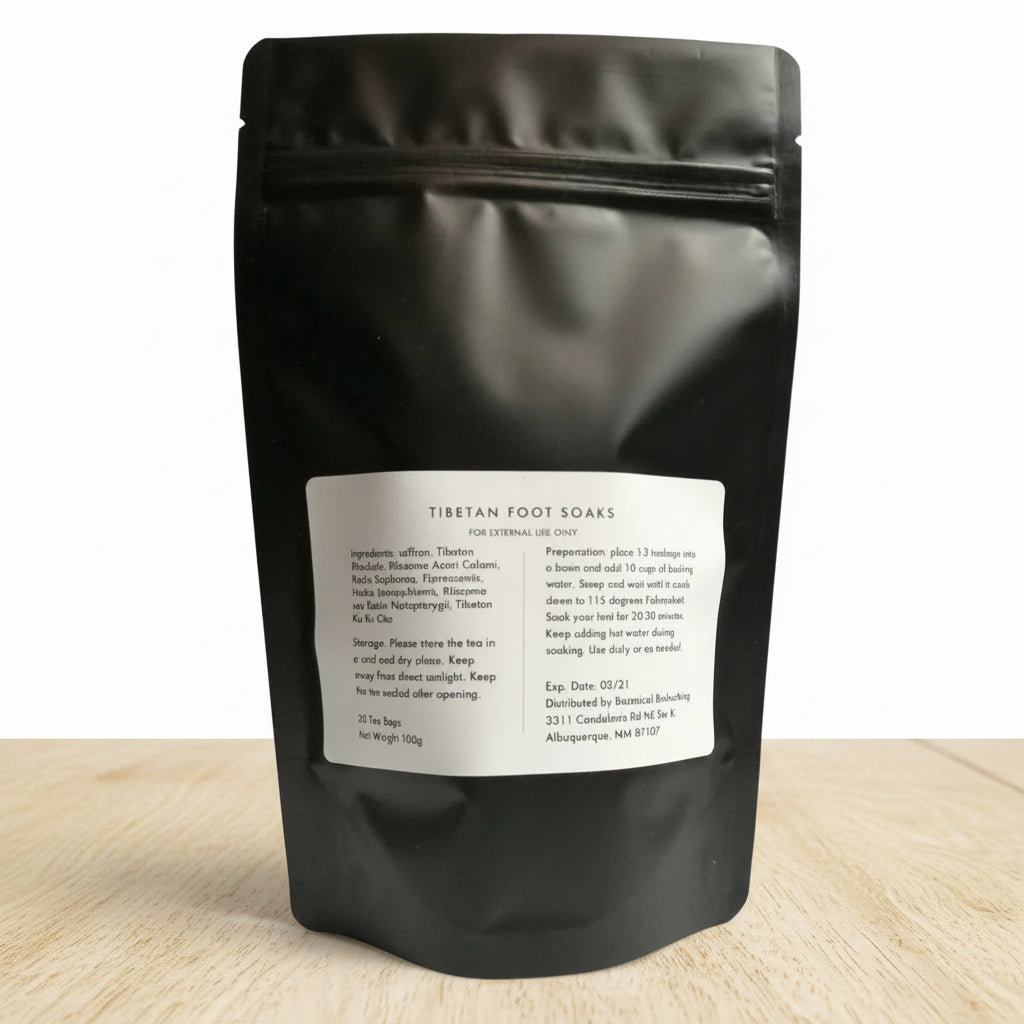
Tibetan Foot Soaks
Wildcrafted Herbs for Circulation, Pain Relief, Gynecological Health & Whole-Body Regeneration
Foot soaks are one of those practices that sound too simple until you understand the physiology behind them. When the feet are immersed in warm herbal water, blood vessels dilate and fresh circulation flows into the feet and legs. As the soak continues, that vasodilation travels upward through the body, opening circulation to the pelvis, organs, and beyond. For women navigating menstrual disorders, endometriosis, cold uterus patterns, blood stagnation, or the demands of a fertility protocol, this is meaningful. Warm, oxygenated blood reaching the pelvic cavity is not just comfort, it's medicine.
Botanical Biohacking's Tibetan Herbal Foot Soaks are formulated by Dr. Andrew Miles, DOM, and Dr. Xuelan Qiu, PhD, who traveled from Tibet to labs in Chengdu to source and verify the quality of every herb. These are wildcrafted, high-altitude botanicals tested and processed to pharmaceutical grade, enriched with Tibetan black salt to create a mineral-rich, hot spring quality soak. Active compounds, including terpenes, volatile oils, and alkaloids, are absorbed transdermally through the dilated vessels of the soaking feet, making this an ideal herbal delivery method for those with sensitive stomachs or who struggle with oral herbal compliance.
Why Foot Soaks for Gynecological Health and Fertility
In TCM, many gynecological conditions, including painful periods, irregular cycles, endometriosis, fibroids, and fertility challenges, are understood through the lens of cold, blood stagnation, and qi obstruction in the uterus and pelvic cavity. These patterns are notoriously responsive to warmth and movement. Foot soaks address both.
By driving circulation upward through consistent use, Tibetan foot soaks help warm the uterus and pelvis, move Blood and Qi stagnation, and create a more receptive environment in the reproductive tissues. At Four Flowers, we recommend Tibetan foot soaks as a supportive home practice for patients navigating:
- Menstrual irregularity and dysmenorrhea driven by cold or blood stagnation
- Endometriosis and pelvic congestion patterns
- Thin uterine lining and poor uterine blood flow
- IVF and IUI preparation and pre-embryo transfer support
- General fertility support for unexplained infertility with Cold or Stagnant patterns
- Postpartum recovery
For embryo transfer cycles specifically, the foot soaks are used in the days leading up to transfer to support pelvic warmth and circulation to the uterine lining. Always confirm the timing and appropriateness of use with your practitioner.
Key Herbs & What They Do
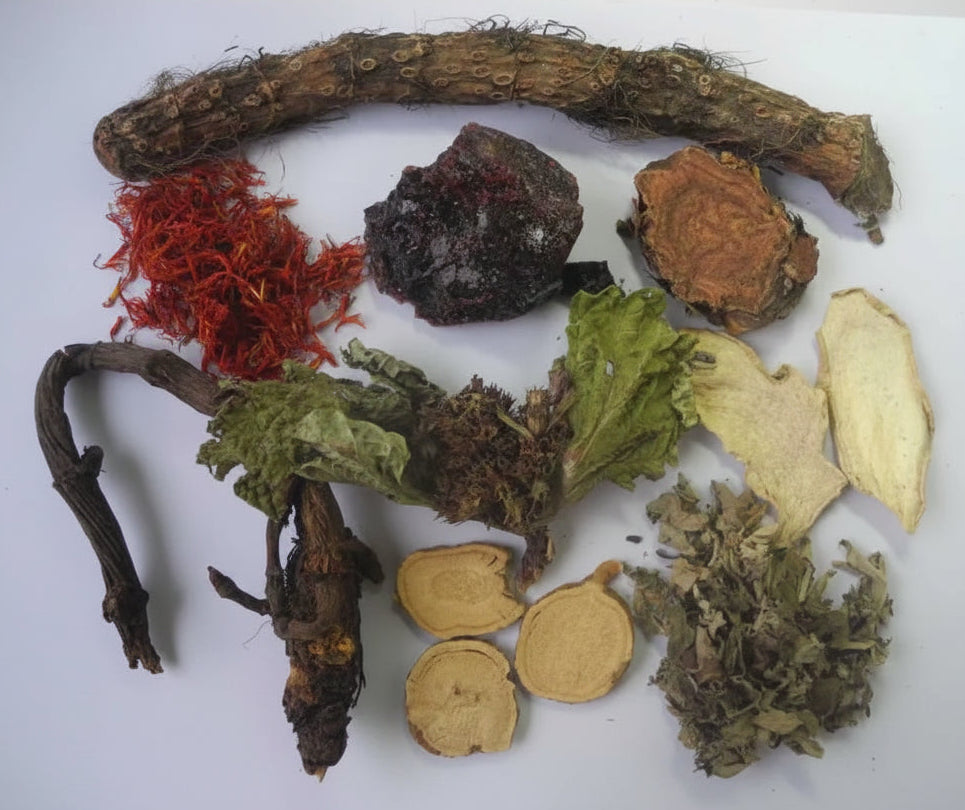
- Du Yi Wei (Lamiophlomis rotata): A Tibetan medicine staple with anti-inflammatory properties, antioxidant effects, and the ability to support red blood cell production and reduce arterial stenosis. Helps stop bleeding and reduce pain
- Hong Jing Tian (Rhodiola tibetica): Increases oxygen in the blood, improves immune function, alleviates chronic pain and inflammation, and improves chronic fatigue. Known as a remedy for altitude sickness due to its blood oxygenation capabilities
- Hong Hua (Carthamus tinctorius, Safflower): A primary blood-invigorating herb in TCM used to move blood stasis, relieve pain, regulate menstruation, and improve circulation. Widely used in gynecological conditions involving blood stagnation
- Qiang Huo (Notopterygium root): A high-altitude imperial-grade herb containing 78 volatile oils, with anti-inflammatory, analgesic, and antifungal properties. Improves blood flow to the coronary arteries
- Zang Chang Pu (Acorus calami rhizome): Offers a mild tranquilizing effect, regulates the digestive system, improves gut-brain axis function, and has antimicrobial properties. Treats a variety of neuropathies
- Ku Shen (Sophora root): Broad-spectrum antimicrobial, antifungal, antiviral, and antiparasitic. Inhibits bacterial biofilms associated with many chronic conditions
- Gan Jiang (Dried ginger): Warms the interior and the uterus, moves cold and stagnation, relieves pain, reduces inflammation, protects the liver, and prevents blood clots. A foundational warming herb in gynecological TCM formulas
- Ai Ye (Artemesia/Mugwort): A primary uterine-warming herb in Chinese medicine. Warms the channels, disperses cold, stops bleeding, and relieves menstrual pain. Its volatile oils offer antiviral, antibacterial, and antifungal benefits
- Ka Ru Cha (Tibetan Black Salt): Contains hydrogen sulfide and a rich mineral profile including sodium, potassium, calcium, magnesium, iron, and sulfur. Creates a high mountain hot spring quality in the soak water, stimulates the Klotho gene associated with longevity, and preserves the herbal constituents
What the Soak Feels Like
Most people feel warmth moving up through the legs within the first 10 to 15 minutes. Some notice sensations in the knees or hips, a feeling of warmth spreading into the lower abdomen, and a mild, pleasant relaxation throughout the body. A light sweat toward the end of the soak is normal and beneficial.
How to Use
Place 1 to 3 sachets into a basin and add 5 to 8 cups of boiling water. Steep until the water cools to approximately 105 degrees Fahrenheit (40 degrees Celsius). Soak feet for 20 to 30 minutes, adding hot water as needed to maintain temperature. Use a thermometer to confirm temperature, especially for those with reduced sensation. Keep a thermos of hot water nearby and remove feet before adding.
After soaking, dry feet thoroughly, put on warm socks, and avoid cold floors or drafts.
Precautions
- Do not use during the first trimester of pregnancy.
- Do not use if you have open wounds, active infection, burns, or a bleeding disorder
- Do not use with metastatic cancer or any condition where moving blood is contraindicated
- Wait at least 7 days post-surgery before use
- Use with caution during a cold, allergy flare, or immune challenge
- Consult a qualified practitioner
Sourcing & Quality
Sourced by Dr. Andrew Miles and Dr. Xuelan Qiu, PhD (pharmacology), directly from wildcrafted Tibetan and high-altitude sources. Processed in Chengdu with third-party quality testing and sustainable harvesting practices. A portion of proceeds supports an orphanage in Tibet.
Count: 20 sachets
The information provided on this website and the products sold here are not intended to diagnose, treat, cure, or prevent any disease. Please consult with a healthcare professional before starting any new health regimen or using our products, especially if you have pre-existing conditions or are pregnant or nursing.